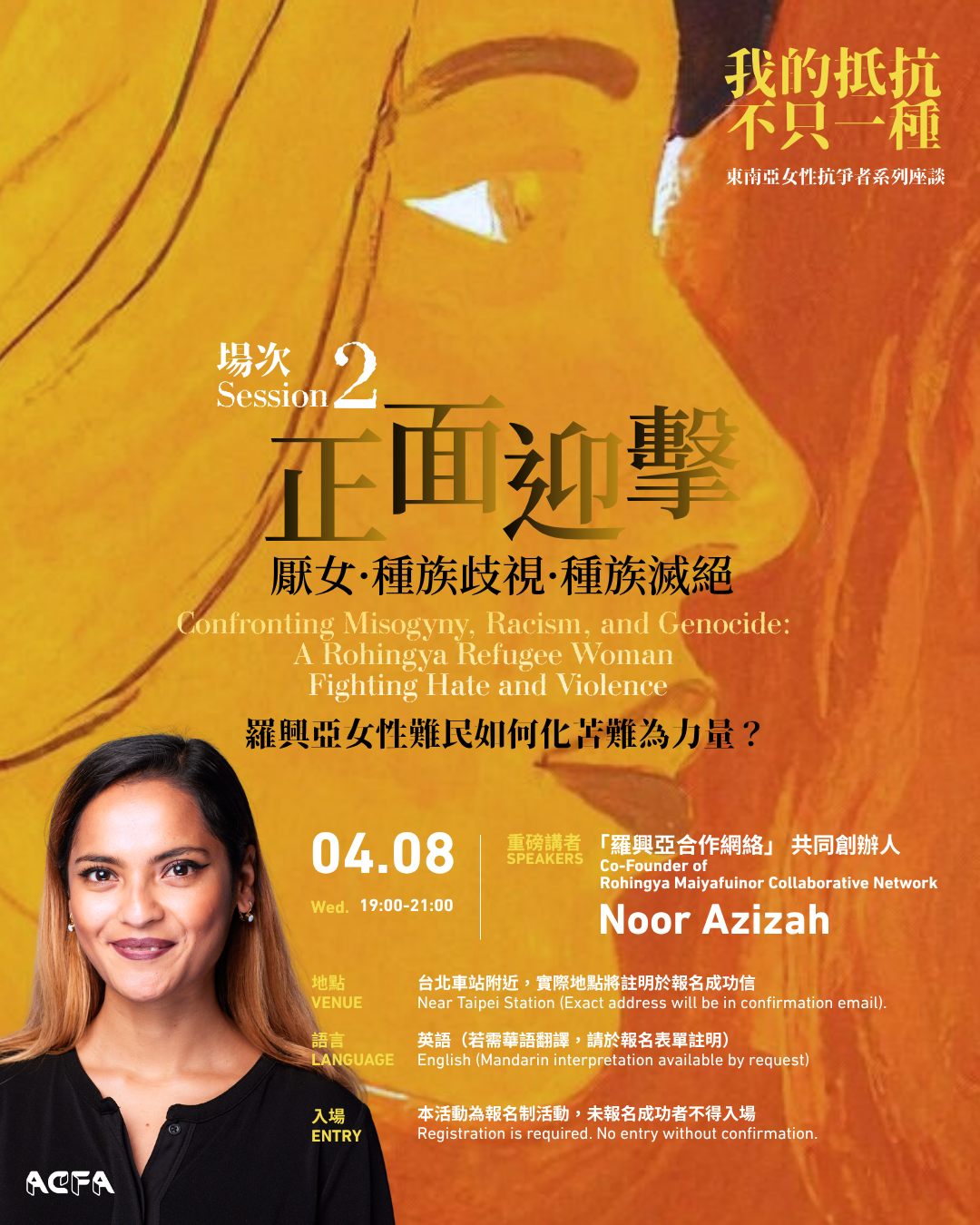
【我的抵抗不只一種:東南亞女性抗爭者系列座談2】正面迎擊厭女X種族歧視X種族滅絕:羅興亞女性難民如何化苦難為力量? Confronting Misogyny, Racism, and Genocide: A Rohingya Refugee Woman Fighting Hate and Violence
活動資訊 Event Information
講者:羅興亞合作網絡(Rohingya Maiyafuinor Collaborative Network) 共同創辦人 Noor Azizah
日期:2026/04/08(三)
時間:19:00-21:00
語言:英文(若需中文翻譯,請於報名表單註明)
形式:實體
地點:近台北車站(將於報名成功信件通知確切地點)
身為羅興亞女性,Noor Azizah經歷了緬甸軍方的滅村襲擊與種族滅絕,並與家人在馬來西亞經歷超過八年的流亡。
然而,生存與逃離並不是她的終點。
在獲得澳洲的難民庇護資格後,她將被壓迫的經驗轉化爲行動的開始。
從一位種族滅絕倖存者,成為在公共與數位空間中持續為羅興亞人發聲的人權捍衛者。
她共同創立由羅興亞女性難民領導的 Rohingya Maìyafuìnor Collaborative Network (羅興亞合作網絡),將遭受種族滅絕、種族歧視、性/別暴力的經驗轉化為行動與組織的力量,正面迎擊來自緬甸、馬來西亞等地的種種族歧視與厭女仇恨言論。
本場活動邀請您透過 Noor Azizah 的故事,理解一位經歷種族滅絕的羅興亞女性難民,如何在流亡中持續抵抗、發聲與行動;也看見她的生命經驗,如何挑戰社會對難民的刻板印象,展現她如何從種族滅絕倖存者,走向對抗性/別暴力與壓迫的人權捍衛之路。
關於講者 Noor Azizah
羅興亞合作網絡(Rohingya Maiyafuinor Collaborative Network) 共同創辦人。Noor Azizah 是 Rohingya Maìyafuìnor Collaborative Network 的共同創辦人,這是一個由難民、羅興亞女性領導的組織。Noor 積極為遍布東協、流離失所的羅興亞人發聲,特別是那些因武裝衝突、迫害與被迫遷移而受影響的社群。透過她的工作,Noor策劃倡議行動、提供人道援助,並建立策略性聯盟,以回應社群當前面臨的緊迫挑戰。Noor 致力於以社群為本的解決方案與集體行動,特別強調女性與兒童的自主權與權利。她的努力聚焦於提升流離失所羅興亞人的生活品質,確保他們的尊嚴、權利與福祉得到保障。
As a Rohingya woman, Noor Azizah survived genocide carried out by the Myanmar military, and spent over eight years in exile with her family in Malaysia.
Yet survival and escape were not the end of her story.
After being granted refugee protection in Australia, she transformed her experiences of oppression into action. From a survivor of genocide, she has become a human rights defender who continues to speak out for the Rohingya in both public and digital spaces.
She co-founded the Rohingya Maìyafuìnor Collaborative Network, a refugee-led organization by Rohingya women, turning lived experiences of genocide, racial discrimination, and gender-based violence into collective action and organizing power. Through this work, they confront ongoing racism, misogyny, and hate speech faced by Rohingya communities in Myanmar, Malaysia, and beyond.
Through Noor Azizah’s story, this event invites audiences to understand the many forms of resistance and action embodied in the everyday lives of Rohingya women who have survived genocide. It is also an opportunity to witness how her journey challenges dominant narratives about refugees, reclaiming her voice not only as a survivor, but as a human rights defender resisting gender-based violence and systemic oppression.
Speaker :Noor Azizah, Co-Founder and Executive Director, Rohingya Maìyafuìnor Collaborative Network
Noor Azizah is the co-founder of the Rohingya Maìyafuìnor Collaborative Network, a refugee-led, Rohingya women-driven organization. She actively advocates for displaced Rohingya communities across ASEAN, particularly those affected by armed conflict, persecution, and forced displacement. Through her work, Noor organizes advocacy initiatives, delivers humanitarian aid, and builds strategic alliances to address the urgent challenges facing her community.
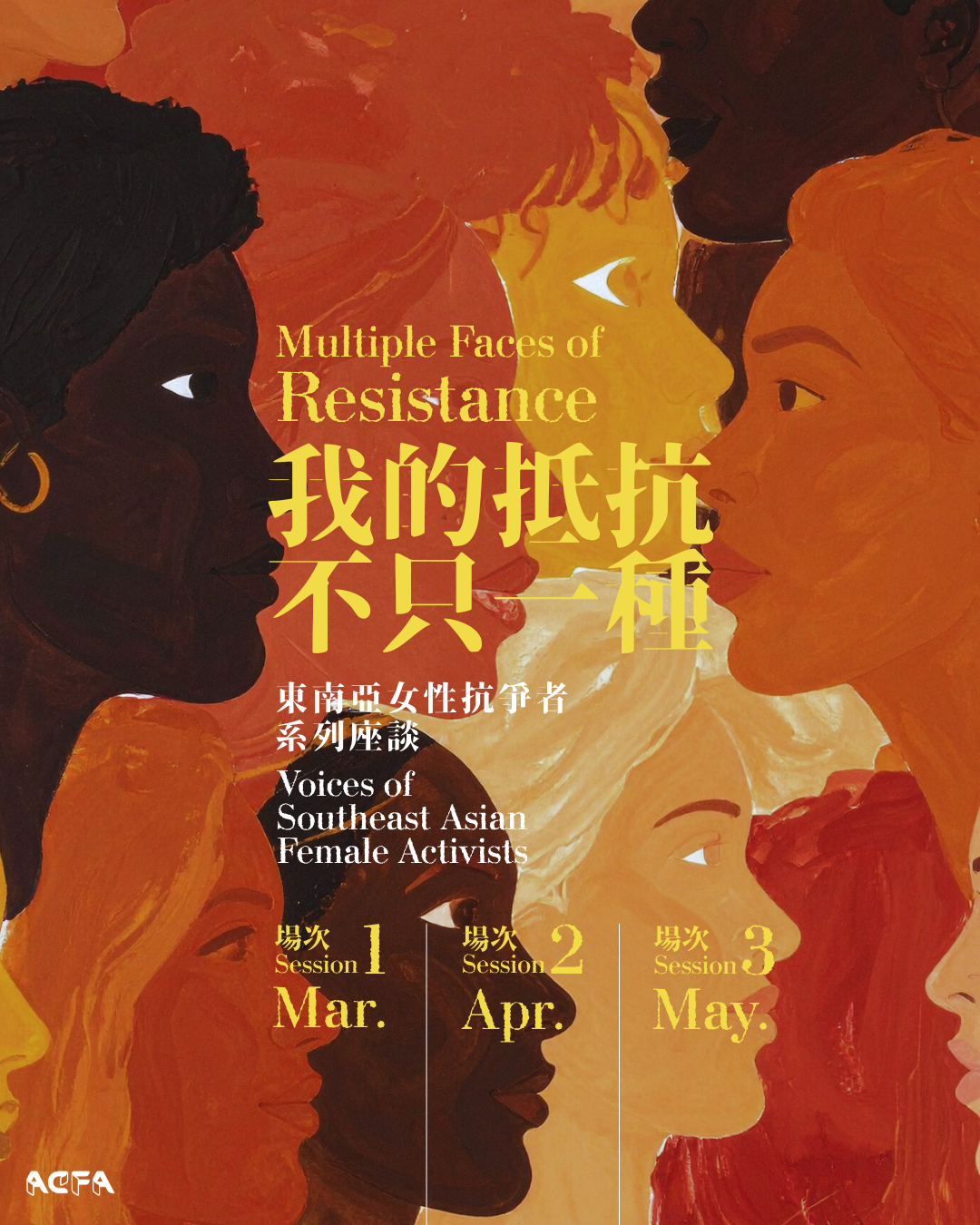
我的抵抗不只一種:東南亞女性抗爭者系列座談
我們的世界彷彿一座混亂與不安的圍城,我們看見各地人權工作者面臨五花八門的威脅與鎮壓,從監控、潑漆、逮捕、被消失到法外處決,女性投入公共參與更難以迴避性別議題,以及種種基於性與性別不成比例的評價和暴力。在風險與壓迫中,是什麼召喚他們?在圍困中支撐他們的信念與行動?
本次系列座談,我們邀請東南亞女性人權工作者分享他們的故事與經歷,他們擁有不只「一種身份」,他們可能同時是民主運動者、是女性、是原住民、是難民,在高風險的環境下抵抗多重壓迫,抵抗威權、殖民、種族主義與父權,為原住民、難民、女性等他們所關懷的人群與信守的價值努力。
當你見證她們的故事與經歷,感受到她們的精神與風采,你的認同和關注也可能在未來轉化為支持她們的行動。
Monthly Series: Multiple Faces of Resistance: Voices of Southeast Asian Female Activists
The world feels like a city besieged by chaos and uncertainty. We have witnessed human rights advocates facing various threats and forms of repression, from surveillance, attacks, and arrests to enforced disappearance and extrajudicial executions. Women activists must also confront gender-based challenges in public engagement, and disproportionate judgment and violence based on sex and gender.
Amid such risks and oppression, what calls them forward? What supports them in continuing their fight?
In this series of talks, we have invited Southeast Asian women human rights activists to share their stories. They come from diverse backgrounds and resist authoritarianism, colonialism, racism, and patriarchy in high-risk environments. Through these talks, we hope to learn from their multiple forms of resistance, and that our inspiration and attention to their struggles may one day be transformed into concrete support for women activists.